Kitten Feeding Schedule: From Newborn to 1 Year
This chart shows when, what, and how much to feed your fluffy bundle of joy.
By Doug Jimerson. Reprinted from dailypaws.com
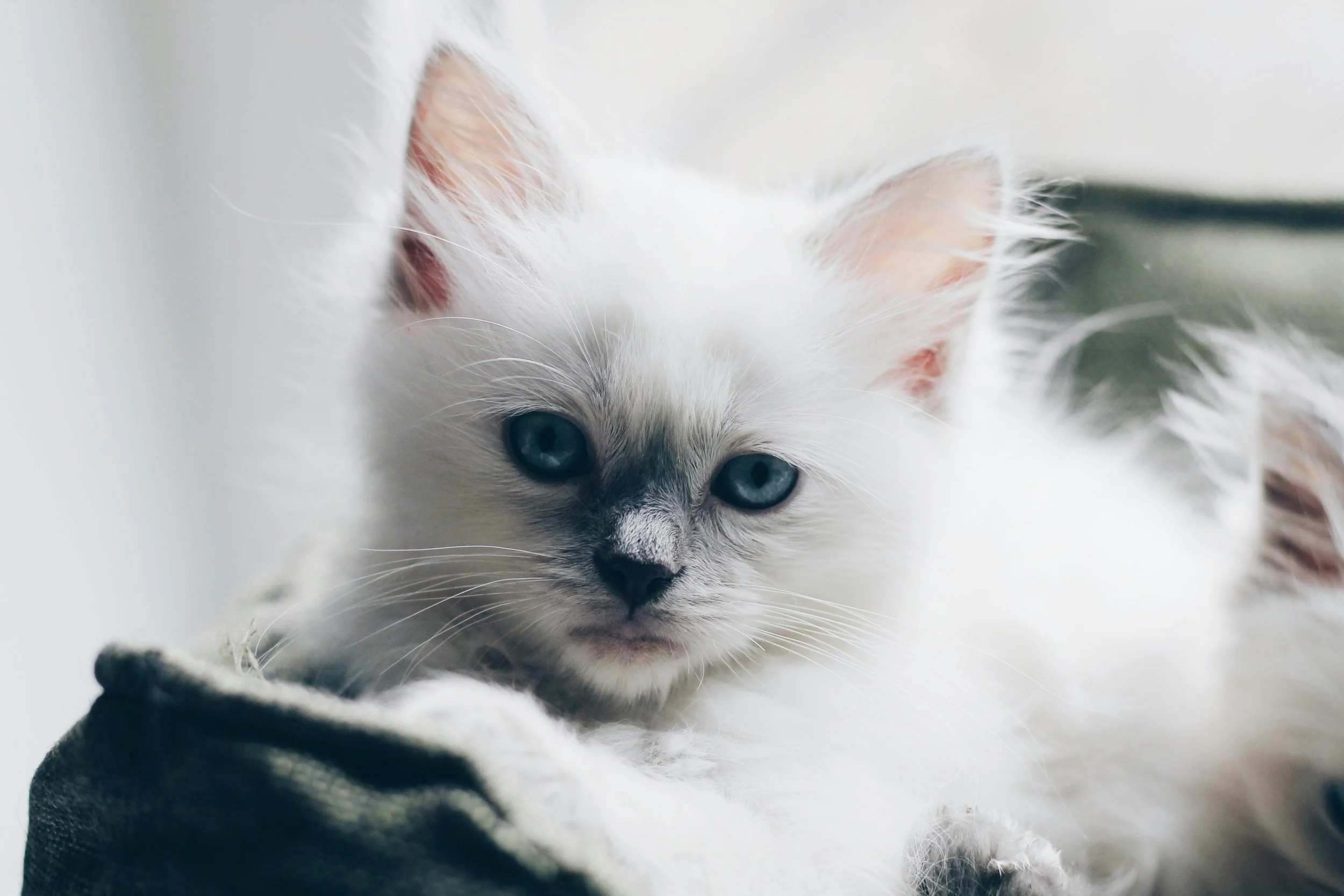
Kittens, like human babies, start life by consuming liquid nourishment and slowly graduate to solid foods. Mother cats take care of a kitten's nutritional needs through their milk from the day their kittens are born until they are around 4 to 6 weeks old.
Then, they begin the weaning process. During this period, kittens are gradually introduced to solid foods. The weaning process typically involves the mother cat showing the kittens how to eat and encouraging them to try new foods. By around 8 to 10 weeks of age, most kittens are fully weaned and capable of eating solid food on their own.
This kitten feeding chart shows just how much to feed your kitty as they go through their first year of life.
Feeding an Orphaned Kitten
If you have a kitten without a mother, you need to provide food that's formulated for kitten health. Whether your orphaned kitten is a newborn or one that's a few weeks old, you should bottle feed them. Bottle feeding a kitten isn't difficult, but it does take a little know-how to do it properly. These tips for how to bottle feed a kitten can help.
Using a Commercial Kitten Milk Replacer
If a mother cat is unable to feed her little ones, the kittens will need human help to get the nutrients they need. To feed a kitten, skip the standard milk in your fridge! This will cause tummy upset and will not give the kittens what they need to survive. You'll need to purchase a commercial kitten milk replacement to get them the special nutrients they need. This product is available at local pet stores or your veterinarian's office.
Never use cow's milk or any other dairy alternative. Kitten milk replacer is formulated to provide the same nutrition that a mother cat's milk offers, and it comes in two forms: dry or canned.
Kitten Feeding Chart
Kittens must eat frequently in their first few weeks to consume enough nutrients to keep them healthy and growing. Follow this feeding schedule using a commercial kitten milk replacer for kittens at each age. Just remember you should generally feed a kitten until its belly feels full.
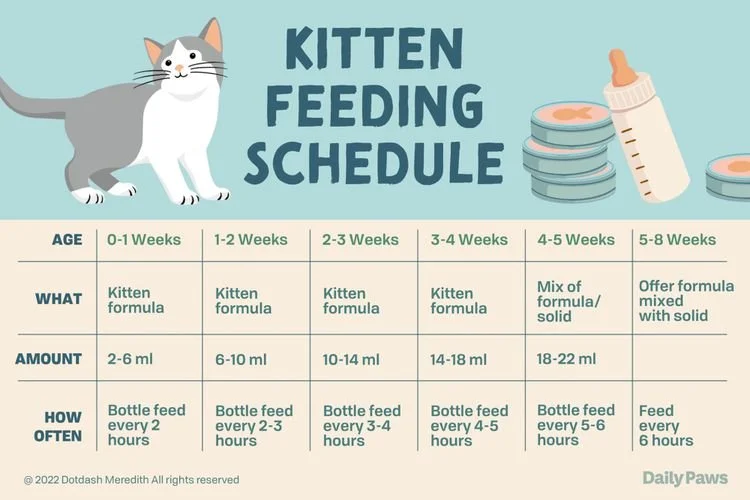
If a kitten is being fed by their mother, the mama cat will take care of weaning the kitten off her milk on her own—usually by around 4 weeks. The same timeframe applies to kittens who are bottle-fed. At this point, begin introducing specially made kitten food to their diets by mixing a little wet kitten food with the milk replacement to make a mixture of gruel. During the weaning process, kittens will still need to be bottle-fed as it's unlikely they'll get all the nutrients they need from the small amounts of the special slurry they eat. Throughout the fifth week, incorporate less formula into the gruel and introduce dry kitten food, along with a bowl of water.
Over the next two weeks, gradually increase the amount of kitten food as you decrease the milk replacement in the mixture. By the time the kittens are 8 weeks old, they should be fully transitioned to solid kitten food. This is also the point when veterinarians recommend kittens begin their vaccination schedule. Once the kitten is 2 months old, they'll need to be fed twice daily with regular kitten food. After their first year, it's usually OK to switch to adult cat food, though you'll want to check with your veterinarian.
How Much Weight Should Kittens Gain?
As it's growing, weigh your kitten every day or so to be sure it's gaining weight. Newborn kittens should gain 3 to 4 ounces a week and weigh approximately 2 pounds by the time they are 8 weeks old. If your kitten isn't gaining weight, consult your veterinarian.